

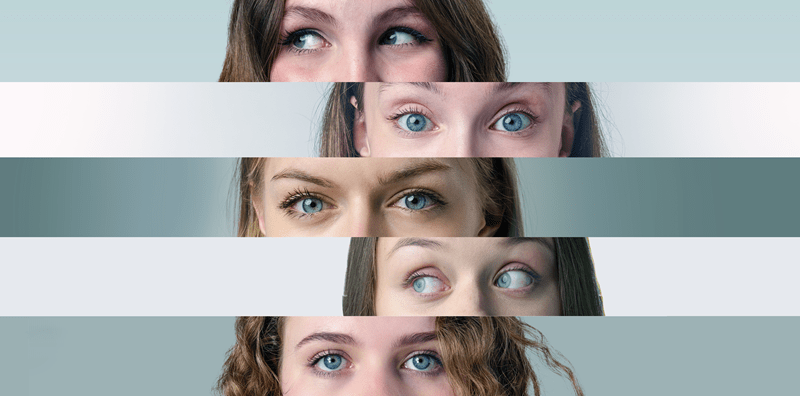
The invisible influence that guides every experience, belief, and choice made by humans is called ‘human perception’. It is through our perception that we view the world, interpret stimuli from our senses, and construct our own unique view of reality, which seems real, although it is distinctly personal to each individual.
When a person perceives something, they are not directly perceiving ‘reality’. Instead, that person’s brain takes that stimulus. It interprets it, utilizing the brain’s processing capacity in conjunction with the person’s memory, emotions, and expectations to create a perception of what that person is seeing.
Perception is primarily based on sensory input, but goes well beyond just sensory data from the eyes, ears, and skin. While the human brain is processing, it also edits the stimulus, filling in the blanks where needed, and in many cases, creates something that does not truly exist. Therefore, what we perceive as a stable environment actually means that we trust what we perceive as stable.
It’s essential to understand how human perception works because by grasping this concept, we can learn to challenge our preconceived notions about what we perceive as “real” and appreciate the fragility and wonder of our view of the world.
The process by which the brain receives and creates meaning from our sensory experiences is known as human perception. Human Perception gives us information about how the world appears to us, the patterns we see and act upon, and provides insight into how we relate to our surroundings. Human perception is responsible for assigning meaning to something that would otherwise just be random waves of light, sound, and touch.
Human perception affects all aspects of our lives, including emotion, behavior, relationships, and decision-making. There are multiple reasons why two people who have undergone the same experience may recount it differently; these differences arise from the filters through which they interpret the experience.
In other words, human perception is not simply a by-product of passive processing; rather, it is the active use of our brains' ability to process large amounts of sensory data with very little overlap between the sensory input of one person and another. By continually predicting and making sense of the information we receive, the brain enables us to live in the present without worrying about what will happen next or how we will respond. However, this same ability to respond efficiently also leads to misperceptions and false interpretations of what we have seen, heard, and felt due to how the brain processes sensory input.
Our understanding of our world primarily relies on the five senses: Touch, Sight, Taste, Smell, and Sound. All these senses provide information to our brains, which are then processed in a way that allows the brain to construct a complete experience. However, this process is misleading, as we create most of our 'seeing' or 'hearing' based on information that the brain has received, rather than through direct observation.
The Brain uses 'selective attention' to prioritize which sensory inputs are the most important while ignoring others. This means that the brain will allow you to overlook obvious details or not even hear your name when called in a crowded environment until the brain decides it is essential.
The incredible amount of information that our brains process allows us to interpret what is happening in the world. The brain receives hundreds of thousands of pieces of information every second to create an accurate and clear view of our environment; However, this processing of data is done by using simplified methods of interpretation using these rules rather than having to think about what is going on in our environment, which would take too long.
For example, with vision, the eye sends a series of pictures to the brain, and the brain must connect these pictures and correct for areas such as those that do not see or experience motion blur. As a result, we experience a seamless view of the world because our eyes are constantly and rapidly moving.
Sensory illusions reveal the limitations of human perception and occur when the brain's expectations conflict with the actual sensory information received, resulting in an experience that appears highly realistic but is not entirely accurate. Examples of sensory illusions are optical illusions, auditory hallucinations, and phantom sensations. These types of illusions provide insight into how reality is perceived. Our brain tends to favor a consistent view of the world over a complete or accurate one. Therefore, when presented with two conflicting pieces of information, the brain tends to "choose" the one that appears to be the same as what was previously seen. This is why still images sometimes appear to be moving, or why we often hear the same sound presented in different contexts and perceive it as having a different meaning. Thus, the understanding of sensory limitations explains why eyewitness recall is often unreliable and why our level of confidence in something doesn't always reflect how accurate that information will be.
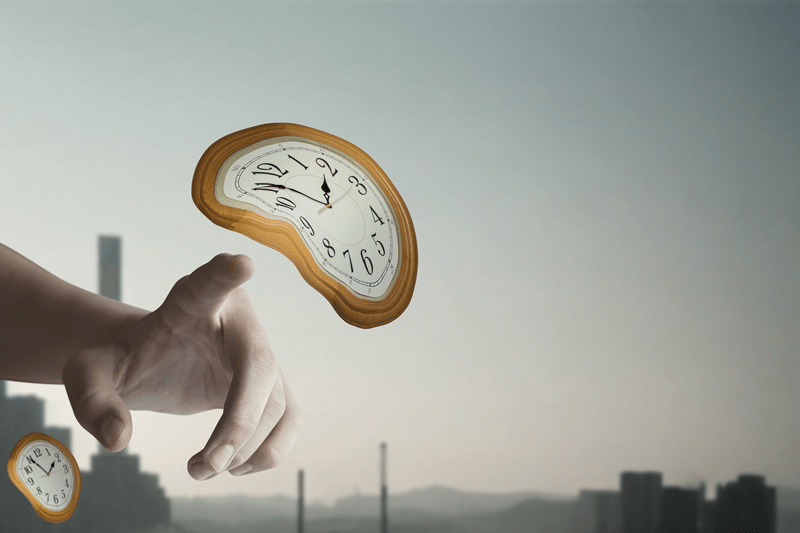
The subjective perception of reality refers to an individual's perception, not necessarily how another person would perceive it. Whereas physical (objective) reality is present at all times, it is never experienced directly by anyone. Everything you know as physical reality is filtered through perception defined by one's own unique biology and experiences.
Therefore, in this manner, one's subjective perception of the physical universe is so strong and real that it makes those beliefs feel absolute, even in contradiction to available objective evidence. As a result, it creates a form of defense mechanism in the brain for what it perceives as necessary for survival.
Truth is defined by how an individual sees the physical reality in their own subjective sense. Thus, recognizing subjective reality can cultivate a sense of empathy, critical thought, and open-mindedness because one realizes that much disagreement occurs not due to a lack of knowledge, but rather that the differences of opinions usually arise from how each person perceives the same physical event.
The flexibility of human perception exists within biological limits, but biological perception can be altered by experience. Those who practice art, athletics, or music are more sensitive to sensory input and perceive the world in different ways due to their training.
Mindfulness and meditation are both ways to better perceive the world by eliminating pre-determined judgments. These types of practice help develop awareness of the sensory inputs one receives from their environment and allow us to realise how frequently our perceptions are made automatically.
Like education and experience, exposure to more perspectives creates a greater amount of adaptability in human perception. A greater variety of perspectives reduces the degree to which there is a distortion in one's perception and promotes a more complete understanding of an object and the world.
By becoming aware of how humans perceive their environment, individuals can challenge their own assumptions, avoid being manipulated, and develop critical thinking skills. Perception shortcuts have been exploited by advertisers, media companies, and tech industry companies to manipulate consumer behavior through deception.
When we learn how our brain creates sensory illusions and subjective realities, we become better decision-makers. Awareness of sensory illusions and subjective realities creates both scepticism without cynicism and curiosity without fear. Understanding how humans perceive their environment teaches us to be aware of the limitations of certainty and the need for humility; it shows us that the way we see the world is an interpretation, and therefore, subjective.
Perception is what defines our view of the world. The way we see the world depends primarily on sensory input from our five senses, how our brains process that input, and our individual experiences. By understanding the concept of how humans perceive the world, we develop awareness, clarity, and the ability to gain control over our perception of the world through the effects of sensory illusions and subjective reality.
Human perception refers to how sensory inputs (e.g., sight, sound) are interpreted by the brain and used to generate meaning about the world we interact with and create a subjective reality.
Sensory illusions can trick us into thinking that something is happening when in fact it's not. These illusions are created by using the brain's ability to make predictions about sensory input to override the original sensory input with a prediction of what has occurred.
The way we perceive something subjectively is based on what we believe, how we remember an event in our lives, and what we have been exposed to (through all our senses).
While we cannot change our perceptions or experiences, we can improve the way we develop new perceptions and cognitive models of reality by practicing mindfulness and other forms of training, as well as by actively exposing ourselves to different forms of sensory input from all five senses.
Each individual will experience a different "reality" than someone else because of the individual's genetic makeup (e.g., biology), how the individual grew up (e.g., culture), and how the individual lived before today (e.g., daily experiences).
This content was created by AI