

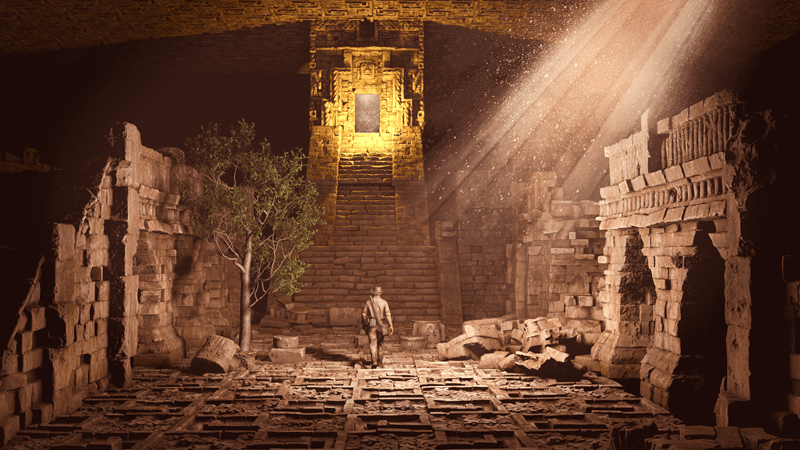
Throughout time, historical enigmas remain a captivating force for humankind. Numerous perplexing instances throughout history have contained undiscovered artifacts and extraordinary means employed by earlier peoples during their respective eras, as well as alliances between previous civilizations and individuals spanning space and time. Historical enigmas not only showcase humanity's resilience in the face of adversity but also demonstrate how society has leveraged its knowledge for the betterment of humankind.
When beginning to explore the fascination of historical enigmas, the reader's initial encounter may reveal various avenues that illuminate certain artifacts, significant archaeological findings, and myths or legendary accounts that, at some point in history, became distorted.
They are still unsolved enigmas simply because Complete or accurate evidence does not exist; there are documented accounts that support the authenticity of the evidence used to support their conclusions, or because the final result of these enigmas is still being sought by historians and archaeologists alike, as well as by anyone curious enough to want to learn more about them.
Because historical mysteries are sometimes based on incomplete or unreliable information (often due to wars, natural disasters, and purposeful destruction of material), they continue to be an area of interest for historians and archaeologists. Additionally, the languages used by early societies were often written in ways that are now no longer known. The combination of differences in language, the way ancient people used symbols to represent concepts, and the cultural differences between early societies and modern societies has created challenges for the contemporary scholar trying to decipher the meaning of ancient historical records. Consequently, there are many unanswered questions and differing views on how to interpret the evidence we've discovered.
One of history’s most striking qualities is the number of ancient societies that have entirely vanished from historical records. Entire cultures were wiped out, leaving only their ruins, their tools, and unanswered questions about them.
Examples of cultures disappearing in the course of history include the Maya Civilization. While highly advanced in astronomy, architecture, and agriculture, the people of the Mayan Civilization abandoned their cities and settled elsewhere. Climate change, war, and political collapse are among the theories proposed as causes of their decline; however, many questions about the Mayan Civilization remain unanswered.
Much mystery surrounds other ancient cultures as well; for example, the Indus Valley Civilization has an undeciphered script. Because of this, the ancient Indus Valley Civilization remains one of the many historical mysteries surrounding ancient civilizations that will continue to captivate archaeologists and other researchers interested in the secrets of ancient civilizations for many years to come.
Some historical events may defy both reason and logic. One example is the 1518 Dancing Plague, where many people danced for several days without stopping. Mass hysteria, a toxin, or a combination of factors could have caused the 1518 Dancing Plague. The unknown causes of these events create gaps in our understanding of human behavior and societal stressors that accompany historical events.
As time progresses, additional layers will be added to the timeline of humanity's greatest mysteries.
The everyday monuments that surround us are home to numerous historical mysteries, many of which are considered some of the greatest ancient constructions in human history, for instance, the Great Pyramid of Giza. This remarkable structure was built thousands of years ago, and one of the biggest mysteries surrounding it is how these enormous blocks were transported and precisely placed together. For over two hundred years, archaeologists have studied the Great Pyramid of Giza in an effort to find a definitive answer as to how this phenomenon occurred. This continued speculation of how the Great Pyramid of Giza was constructed shows how historical mysteries continue to capture our interest today. Other structures, such as Stonehenge, Machu Picchu, and Easter Island Statues, are also considered to have historical mysteries associated with them. Many researchers and historians are puzzled by these structures even to this day
Many artifacts disappeared mysteriously from their original locations or were never found. An example of this is The Amber Room; some claim that it was known as the Eighth Wonder of the World. Many researchers have searched for the Amber Room for decades, but it remains missing and is therefore considered one of the most prominent cases of unknown history. For archaeologists, each missing artifact holds untold information and represents opportunities for researchers to unearth the history behind that item. For people who study the past, lost treasures are one of the most intriguing historical mysteries ever documented.

The importance of archaeology in unraveling and solving the mysteries of our past is evident. Every excavation undertaken is full of unknown facts and interpretations, and no excavation has ever given a full answer to any question regarding its historical significance.
Göbekli Tepe is just one example of how archaeology has influenced previously held views on the development of early human cultures. Göbekli Tepe has altered our understanding of history and added numerous new layers to our knowledge of previous cultures. The discoveries made at Göbekli are not only important for solving past mysteries, but they have also created even more mysteries to be solved, which is one reason why these types of mysteries continue to be so engaging.
The discovery of ancient maps that contain advanced geographic knowledge before modern exploration raises numerous historical mysteries, as many undiscovered facts contradict the published historical documents about these ancient maps.
Who were the creators, and how did they possess such detailed knowledge? New discoveries will continue to alter and reshape unresolved historical questions, and they will always spark speculation about lost knowledge or forgotten civilizations.
Historical mysteries will always change with each new piece of evidence that is found.
History contains some mysteries, but unfortunately, due to the loss of evidence or irreversible damage, some of these historical mysteries will likely remain unsolved. Time also erodes artifacts, and the destructive nature of human activity has destroyed many sites crucial to understanding the secrets of antiquity.
Political agendas and the spread of inaccurate information have also complicated the unsolved history. As such, many unsolved historical mysteries persist between fact and speculative ideas.
This uncertainty creates a continuing fascination among the reading public regarding the strange events of our past and the many unanswered questions that persist.
The influence of historical mysteries upon contemporary culture is reflected through literature, motion pictures, documentaries, and scholarly works. The study of these enigmas also stimulates the capacity for critical analysis, illustrating that history remains incomplete.
An examination of historical mysteries creates an avenue of interaction between archaeological findings, figurative representations in literature and film, and verified research methodologies. Focusing on historical mysteries provides a greater appreciation for the intricacy of humankind's experience, while recognizing that our understanding will be forever constrained.
Unanswered questions about human history give rise to numerous historical mysteries that continue to excite and captivate people today. Unsullied periods of human history, natural disasters from prehistoric times, and many secrets in ancient civilizations; all these factors combine to form unanswered questions in human history.
Many mysteries may eventually be answered or solved as archaeological techniques improve over time; however, many mysteries will likely remain unsolved, sparking curiosity for future generations.
Historical mysteries remain essential because they establish new ways of thinking about what we know, uncover hidden truths about the past, and encourage further exploration into archaeological and historical questions worldwide.
One of the best-known mysteries of history that has never been solved is the mystery surrounding the disappearance of cultures such as that of the Maya, which still contain many unanswered questions along with numerous different opinions and theories as to the reasons they disappeared.
Archaeology is a key method for solving historical mysteries through the study and interpretation of archaeological sites and their associated finds to identify hidden truths, while raising new unexplained questions.
Many of the historical mysteries that we have today have a basis in fact. However, due to the limited documentation of ancient cultures, historians often have to develop theories or myths to explain the mystery of these cultures.
Due to the existence of missing or damaged records, archaeology will never be able to uncover all the historical mysteries that exist today, and therefore, many of these mysteries will remain unsolved for the foreseeable future.
This content was created by AI