

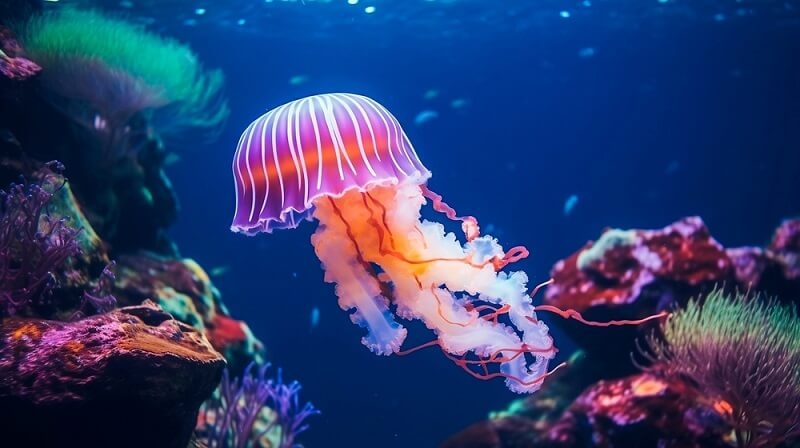
The underwater ocean region that is referred to as the deep ocean is one of the last unexplored areas on our planet. Many secrets about this area remain unknown, and it is home to a variety of unique creatures, as well as fascinating survival strategies employed by these creatures. Far from sunlight and subject to extreme water pressure, low temperatures, and unusual life forms, these deep-sea creatures are living examples of the fact that even in the most extreme environments (where human beings would not be able to survive), there are organisms that thrive. There are many types of deep-sea creatures, from "glowing predators" to ancient-looking sea "monsters", whose behavior and physiology challenge everything we previously understood about the study of marine life.
The ocean quickly becomes an "alien" environment, at a few hundred meters from the ocean surface; there are unusual, light-producing fishes, giant animals that move through the water quietly, and numerous other outstanding examples of the abilities of organisms to adapt to their environment. Scientists estimate that less than 5% of the deep ocean has been studied or explored, which presents an excellent opportunity for discoveries, entertainment, and insights into life in the deep sea.
Many deep-sea animals are capable of surviving in harsh and inhospitable deep-sea habitats where other animals would be crushed almost instantaneously. These areas are characterized by complete darkness, extreme cold, and high pressure; therefore, deep-sea marine organisms have evolved in unusual ways. Creatures at the most profound depths tend not to have eyes, or even have big eyes that can capture the little light that is present. Some deep-sea organisms emit their own light through a process known as bioluminescence, which predatory and unusual-looking fish utilize to attract prey and communicate with one another. Bioluminescence has also played a crucial role in helping scientists unravel the secrets of how the deep-sea world operates. As a fun fact about the abyss: due to the limited food supply, deep-sea organisms tend to be slow-growing, long-lived, and to consume everything that drifts down from above. This adaptation has led to the development of numerous myths of sea monsters lurking in the depths of the ocean.
Although we have developed tools and technologies to enhance our understanding of ocean waters, many deep-sea animals remain shrouded in mystery. Each year, large numbers of marine species continue to be identified, suggesting that we still have so much more to learn about life's origins within Earth's deepest regions. For instance, many types of marine creatures have only been captured on film a single time, leaving scientists wondering what they actually are for decades.
One notable ocean mystery includes the phenomenon of sightings of giant squids. These enormous sea creatures were previously thought to be mythological until video evidence showed otherwise, transforming our understanding of marine biology. Additionally, some of the unique forms of many strange fish defy typical classification methods.
Sound is another area of discussion related to the mysteries of the ocean's depths. Investigators have continued to hear strange noises produced in deep waters, some of which may be caused by various activities involving the movements of deep ocean animals, ice patches, or other unidentified life forms. The facts about the ocean's depths motivate researchers to explore even deeper into its depths to find answers.
Due to the process of evolution, "weird" fish are thought to be the dominant species of the deep sea because survival has been selected over beauty over time. Many creatures of the deep ocean appear "scary" or resemble "aliens" because of their enlarged mouths, long teeth, and flexible bodies.
Anglerfish are the most famous examples of these species. They use a "light" to attract food in the total darkness of the ocean. They also contribute to the lore about sea monsters and the legends of how seas are filled with monsters. Gulper Eels are another example of odd fish; they can eat prey bigger than themselves. This is one of the most unbelievable facts about deep-sea fish and marine biology.
In order to produce offspring, many deep-sea fish have evolved unusual ways to reproduce because they have fewer chances to mate. These behaviours are part of the continuing mysteries of the ocean that fascinate scientists and readers alike.
For every 10 meters in depth, the pressure increases by one atmosphere. Because of the depth of the sea, deep-sea creatures experience hundreds of times more pressure than surface animals. For deep-sea fish and other creatures, their bodies are designed to withstand such pressures without any problems.
Many deep-sea creatures do not have air-filled cavities like surface fish. The absence of air-filled cavities terrifies many deep-sea creatures from collapsing under the extreme pressures found at the ocean's depths. The cell membranes of these deep-sea creatures have developed unique structures to function at these depths and are therefore the first to have existed in the abyss.
Some of the more unusual deep-sea fish possess gelatinous bodies, allowing them to float with little effort due to their ability to resist compression. These adaptations most likely explain how legends of sea monsters may have developed due to the misinterpretation of unusual deep-sea creatures.
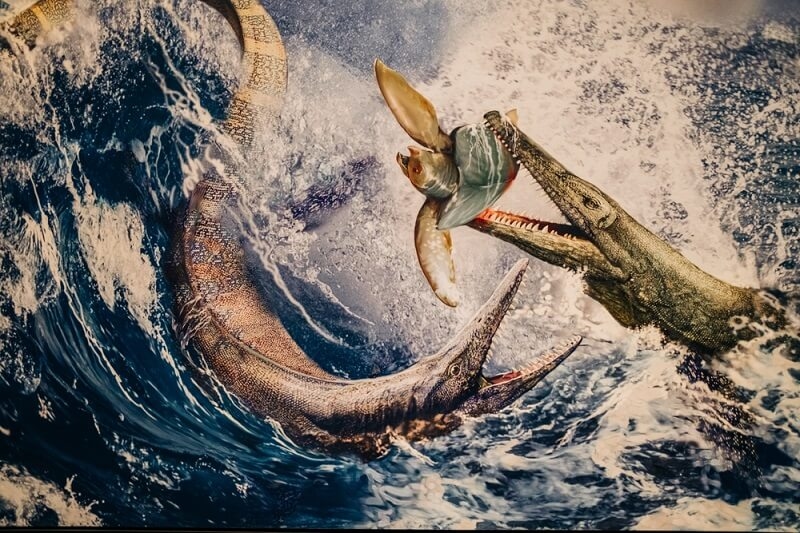
Sea monsters are familiar in many cultures from coast to coast. Although much of what has been written about the giant squid, huge jellyfish, or oarfish may have been exaggerated over time, a vast majority have been inspired by actual living marine organisms. Current scientific knowledge of the oceans indicates that these giant deep-sea species do indeed exist; oarfish have been known to grow up to 9 meters in length (about 30' long) and have been confused with a type of sea serpent due to their size. This creates an overlap between fact and fiction, creating a never-ending opportunity to explore our oceans. Additionally, due to an overwhelming number of unusual fish species yet to be discovered, there is excellent potential for redefining what may be classified as 'sea monsters' through continued deep-sea exploration.
The deep ocean has many astonishing and informative Abyssal Facts that counter some of the scientists' previously held beliefs regarding life and depth in the sea. Particular Deep creatures have life spans estimated to exceed hundreds of years, while other types of Deep animals can survive an extended length of time without the availability of air/oxygen.
In addition to being without air, the chemical energy produced by hydrothermal vents is utilized as energy by some deep-sea creatures, which rewrite the current textbook information regarding marine biology.
Moreover, the ability of many unique and strange fish species to regenerate tissue loss indicates potential breakthroughs in scientific medicine. These discoveries clearly indicate that the ocean's mysteries offer more than just entertainment value - they also hold significant scientific value.
Marine biology is one of the most challenging fields of study of deep-sea creatures. Marine biologists will utilize remotely operated vehicles, submersibles used to explore the depths of the oceans & sonar mapping to locate & study these deep-sea ecosystems & their inhabitants.
Every trip to the ocean unveils a new set of oceanic mysteries, including animals that no one had ever known existed (weird fish) and never-before-seen ecosystems. The ability to sample these deep-sea creatures using high pressure provides researchers with a unique opportunity to study organisms that have never been observed before, making these discoveries extremely rare and valuable.
DNA analysis and imaging technology are now enabling marine biologists to continue providing new insights into the deep oceans, thereby expanding our understanding of life on this planet.
The world is home to a diverse array of deep-sea creatures that inhabit a realm unlike any other, filled with excitement, mystery, and intrigue. Discovering many unusual fish and legendary sea monsters in the ocean allows us to expand our knowledge of what lies beneath the ocean surface, provides scientists with valuable facts about the oceans’ depths, and preserves the unexplained for future generations to discover.
Deep-sea creatures evolved in environments laden with extreme pressure, darkness and cold, which combined to create a unique combination of adaptations; thus, these creatures exhibit an array of strange shapes and characteristics that no other animal on land or in the shallow coastal waters has ever experienced.
The majority of legendary creatures thought to be monsters from the sea stem from actual deep-sea creatures such as the giant squid, the oarfish, and the enormous jellyfish that have been studied through the efforts of marine biologists.
Fish that exhibit bizarre characteristics are prevalent in the depths of the ocean because they have adapted unique morphological characteristics that enable them to thrive in environments characterized by little or no natural light, very little food, and extreme rapid weight loss due to high levels of atmospheric pressure.
The most significant unknowns of the ocean include unidentified sounds, as well as species yet to be discovered, along with unexplored oceanic trench systems. Marine scientists continue to explore and uncover the ocean's mysteries daily.
By conducting research on deep-sea creatures through the lens of marine biology, marine biologists can provide valuable insights into the ecosystems that comprise the deep sea, assist in conservation efforts, and mitigate damage caused by deep-sea mining and pollution.
This content was created by AI